Louisiana Space Travel is an independent travel business and is not affiliated with SpaceX.
SpaceX may be looking to add thousands of acres of public school land to its footprint in Vermilion Parish. Acadiana News First reported on Oct. 28 that a land swap is being discussed for property owned by the Vermilion Parish School District next to the area where Starbase Louisiana, the company’s planned spaceport, would be built. Here’s what we know so far and what it means if you’re visiting or thinking about moving to Acadiana.
The land in question
According to Acadiana News First, the property is made up of six parcels totaling about 4,000 acres. It sits north of LA 82 near White Lake. The next step is an appraisal, and negotiations can begin once that’s done.
The acreage is what Louisianans call Section 16 land, which the state sets aside in each parish to support public education. A parish can’t sell Section 16 land without the Legislature’s approval, but it can trade it, which is why a swap is the plan here rather than a sale.
Vermilion Parish Schools Superintendent Tommy Byler told the station that the spaceport changes how the district thinks about the property, and that the question is whether there’s “something that’s more financially successful for the schools.”
How a swap would work
A swap like this has to follow a public process. A state law covering the Vermilion Parish School Board lets the board trade school land it no longer needs for other land in the parish of comparable value. Before it can, the board must get an appraisal from a certified appraiser, advertise a public hearing on at least three separate days at least 30 days ahead, and make the appraisal available at that hearing. After hearing public comment, a majority of the board’s elected members would have to approve the exchange at a regular meeting. In other words, if this moves forward, residents should get advance notice and a chance to weigh in.
No appraisal value, hearing date or details on what land SpaceX might offer in return have been reported yet.
Also this week: no launch license filed yet
In separate news, WWL Louisiana reported on Oct. 28 that a recent Federal Aviation Administration comment period on siting new spaceports drew dozens of comments about the Louisiana project, even though the FAA says that request is separate from SpaceX’s plans. An FAA spokesperson told WWL that SpaceX has not yet applied for a license to launch Starship in Louisiana. A launch license will still be needed before any rocket flies from Vermilion Parish.
What it means for visitors and newcomers
The public timeline hasn’t changed. Louisiana Economic Development still lists construction beginning by the end of 2027 and a first launch targeted as soon as 2029. Talks over land, appraisals and permits are part of the groundwork, and there’s nothing at Pecan Island for visitors to see yet. If you do drive down LA 82 to take in the marsh and White Lake country, keep in mind that much of the land along that stretch is private or set aside for specific uses.
If you’re weighing a move for the jobs the project is expected to bring, stories like this are a reminder that the spaceport is still years from launch day. That gives you time to get to know the region first. Lafayette, about an hour north of the coast, is where most newcomers will find the schools, housing and everyday conveniences they need. Start with our Why Live in Lafayette page, compare areas in the Neighborhood Guide, and use Plan Your Trip to set up a scouting weekend with plenty of boudin stops along the way.
We’ll share an update if the school board schedules a public hearing on the swap.
Sources: Acadiana News First, Louisiana State Legislature, WWL Louisiana, Louisiana Economic Development.
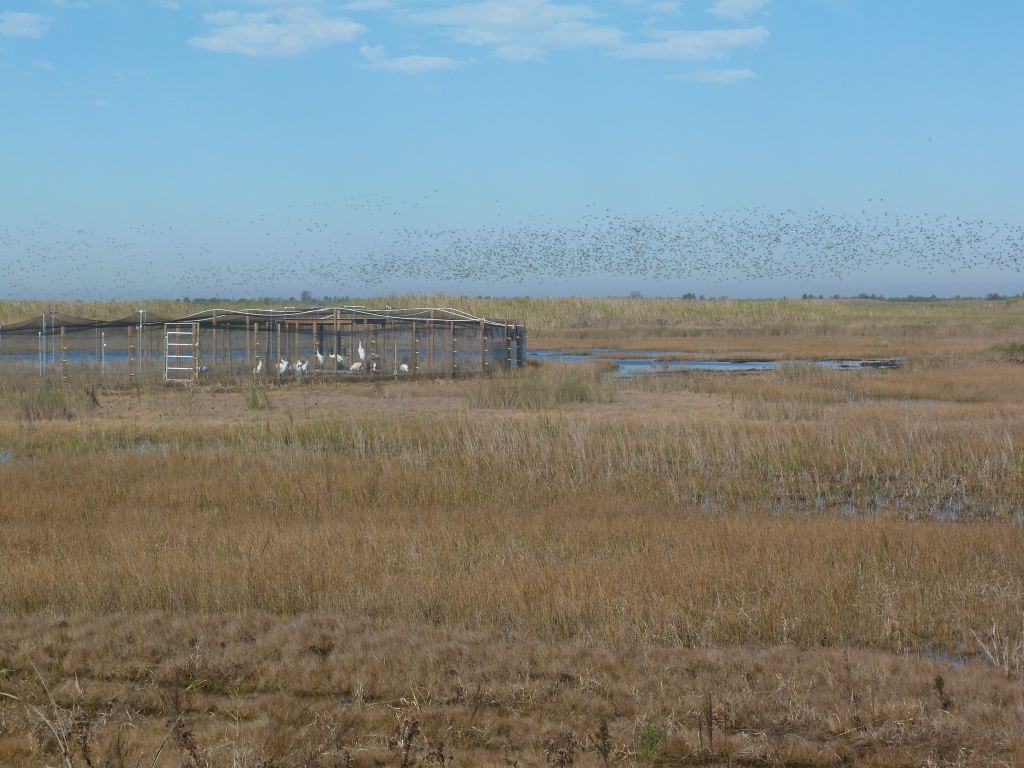
Featured photo: Marsh at the White Lake Wetlands Conservation Area in Vermilion Parish, with a whooping crane pen and a flock of ducks and geese, in 2012. This state-managed land is near, but not part of, the school property described above. Photo: Sara Zimorski/Louisiana Department of Wildlife and Fisheries, via U.S. Fish and Wildlife Service (public domain) and Wikimedia Commons.
