
Louisiana Space Travel is an independent travel business and is not affiliated with Tesla or SpaceX. This post summarizes public earnings reports and is not investment advice.
Tesla reported third-quarter 2026 results after the market closed on Wednesday, Oct. 21. Revenue was flat, and profit came in lower than a year ago, but adjusted earnings beat analyst estimates. Energy storage, Full Self-Driving subscriptions and the Cybercab robotaxi took up most of the call. The figures below come from Tesla’s Q3 2026 Update and the earnings call.
The headline numbers
- Revenue: $28.05 billion, roughly flat compared with $28.10 billion in Q3 2025. Automotive revenue fell 3% to $20.56 billion, and energy generation and storage fell 16% to $2.88 billion, which Tesla said was partly due to tariff-related customer refunds. Services and other revenue rose 33% to $4.61 billion.
- Earnings: GAAP net income attributable to shareholders was $787 million, or $0.22 a diluted share, down from $1.37 billion, or $0.39, a year earlier. Adjusted (non-GAAP) earnings were $0.48 a share, compared with $0.50 a year ago. That beat the $0.45 average in Tesla’s company-compiled analyst consensus and the $0.43 LSEG estimate cited by CNBC.
- Margins: Total GAAP gross margin was 19.6%, up 1.6 points from a year ago. Operating margin was 2.6%, down from 5.8%, as operating expenses rose 39% on research and AI spending. On the call, CFO Vaibhav Taneja said automotive gross margin excluding regulatory credits rose to 18.1% from 16.3% in Q2. He said energy gross margin jumped to 33.1% from 20.4%, mainly because of tariff refunds and a warranty adjustment.
- Cash: Operating cash flow was $6.26 billion, capital expenditures were $4.73 billion and free cash flow was $1.53 billion. Cash and investments ended the quarter at $45.4 billion.
- Vehicles: Tesla produced 464,391 vehicles and delivered 486,532, down 2% from a year ago. Tesla said battery supply was still the main limit on vehicle output and that it ended the quarter with its largest passenger-vehicle backlog in four years. It also delivered its 10 millionth vehicle.
- Energy storage: 13.7 GWh deployed, up 10% from a year ago. Megafactory Texas started production, with a planned capacity of 50 GWh a year.
- FSD (Supervised): Paid FSD customers reached 1.74 million, up 67% from a year ago. That count includes both upfront purchases and monthly subscriptions and excludes free trials. Tesla said more than 75% of new North American deliveries signed up for a paid FSD subscription at delivery, even though every new car comes with a free month. FSD (Supervised) still requires active driver supervision.
Guidance and what management said
Tesla doesn’t give a numeric delivery forecast. Its outlook says volume will depend on demand, supply-chain readiness and how many vehicles it keeps for its own robotaxi fleet. Here’s what management said on the earnings call:
- Capex: Taneja revised 2026 capital spending guidance to about $20 billion. He said Tesla had secured the ability to borrow up to $30 billion but doesn’t plan to draw on it this calendar year.
- Megapack: Elon Musk said Tesla is “almost sold out of all Megapacks for 2027.”
- Vehicle volume: Musk said Tesla is aiming for about 5 million vehicles a year by around 2030.
- Robotaxi: Cybercab rides began in Austin on Sept. 3. Ashok Elluswamy, Tesla’s head of AI, said Cybercab service would launch in Dallas “next month.” He said some customer-owned cars could start joining the robotaxi fleet around Q2 2027. Musk said robotaxi revenue should become “noticeable” around Q2 2027 and could be “a big deal by Q3 or Q4 of next year.”
- Optimus: Early production of the Optimus humanoid robot has started in Fremont. Musk said it would take at least a year to reach a rate of about 20,000 robots a week.
These are company goals and estimates, not guarantees. Tesla’s own update notes that actual results could differ.
SpaceX’s quarter, for context
SpaceX, which now trades on Nasdaq as SPCX, reported its own third-quarter results a day earlier, on Oct. 20, according to its earnings release filed with the SEC:
- Revenue: $14.58 billion, up 161% from $5.58 billion a year earlier. Most of the growth came from the company’s AI segment, which it calls Super Intelligence (SI), and its Starlink Connectivity business.
- Profit: Operating income was $2.79 billion. Net income was $4.40 billion, or $0.35 a diluted share, helped by interest income, other income and a tax benefit. Adjusted EBITDA was $8.81 billion.
- Starlink: 13.6 million consumer subscribers, up 1.6 million from the prior quarter.
- Starship: SpaceX completed Starship Flight 14, its first orbital Starship flight and its first revenue-generating Starship mission, which carried 26 Starlink V3 satellites.
The two companies are also tied financially. Tesla holds a SpaceX equity stake, and its Q3 results included a $142 million unrealized loss on that investment. CNBC reported that Musk said on the SpaceX call that merging the two companies would be a “good idea” and that both boards had formed special committees to discuss it. On the Tesla call he declined to add anything. No deal has been announced.
What it means for Louisiana
Starbase Louisiana: SpaceX’s Q3 release lists the planned development of Starbase Louisiana, a next-generation spaceport “designed to support thousands of Starship flights a year, with the first launch targeted for 2029.” On SpaceX’s Oct. 20 call, Musk called a 2028 first launch the company’s internal aspiration, as we covered in our 20-towers post. The official target is still 2029, and the schedule depends on permits. Starship reaching orbit and flying paying payloads this quarter is the kind of progress a high-volume Louisiana site depends on.
Tesla: Neither Tesla’s Q3 update nor its earnings call mentioned Louisiana. Tesla said Robotaxi now runs in six cities, and Dallas is the next Cybercab market. Nothing announced so far points to Louisiana service. If you’re planning a trip, the Robotaxi rides and Cybercab are in Texas for now.
Planning a visit to watch the spaceport region take shape? Start with our Plan Your Trip page.
Sources
- Tesla: Q3 2026 Update (shareholder deck), Oct. 21, 2026
- Stock Analysis: Tesla Q3 2026 earnings call transcript (Oct. 21, 2026)
- Tesla Investor Relations: Q3 2026 company-compiled earnings consensus (Oct. 19, 2026)
- Lora Kolodny, CNBC: “Tesla beats on earnings and sales even as auto revenue declines” (Oct. 21, 2026)
- SpaceX: “SpaceX Reports Third Quarter 2026 Results,” Exhibit 99.1 to Form 8-K (Oct. 20, 2026)
- Sawyer Merritt on X: highlights from Tesla’s Q3 2026 earnings call (Oct. 21, 2026)
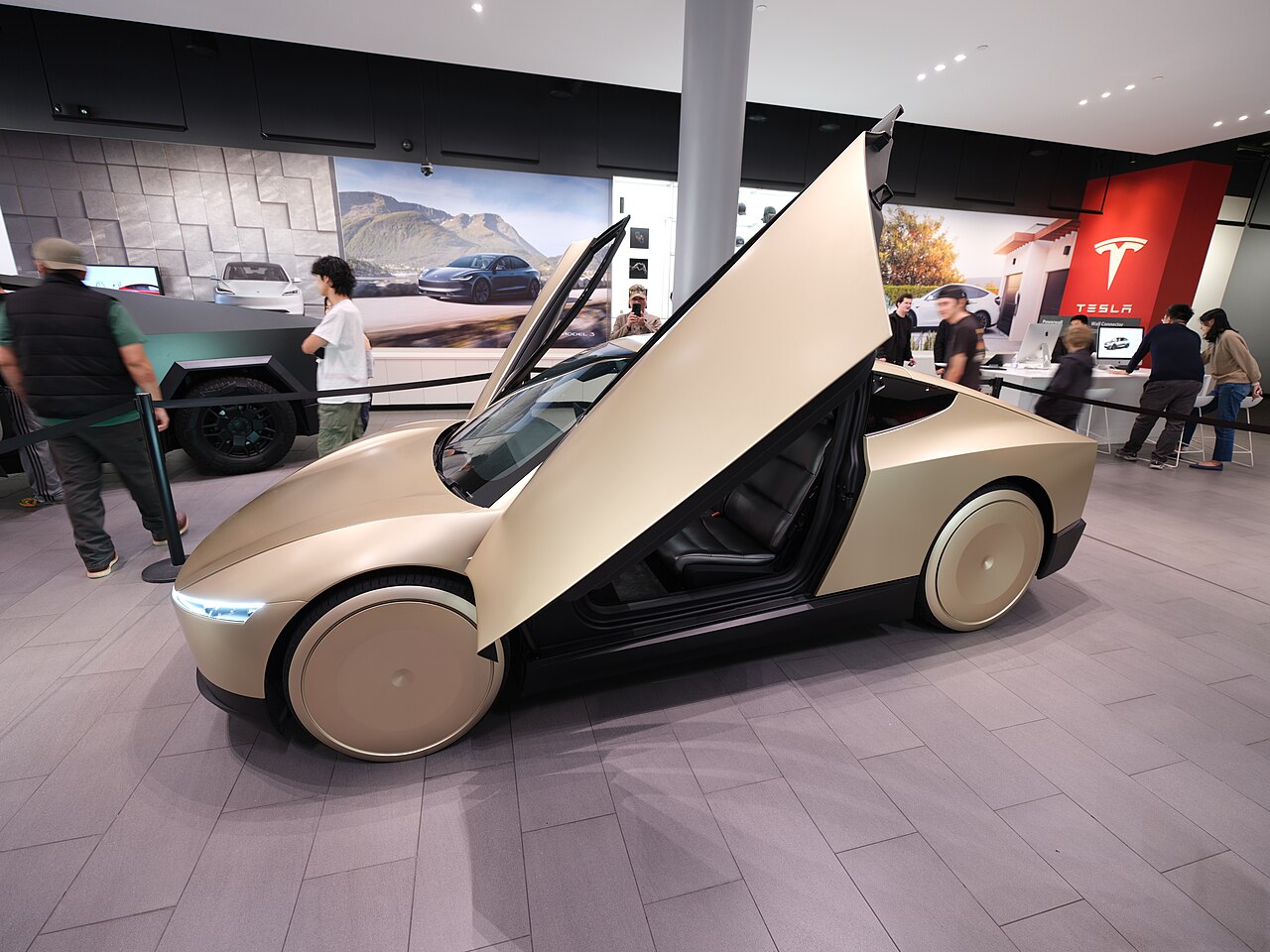
Featured photo: A Tesla Cybercab on display at the Tesla showroom at Santana Row in San Jose, California, November 2024. Photo: Dllu, CC BY-SA 4.0, via Wikimedia Commons.
